
Reformed Agricultural Machine: When Is It Worth Investing and How to Evaluate Before Buying
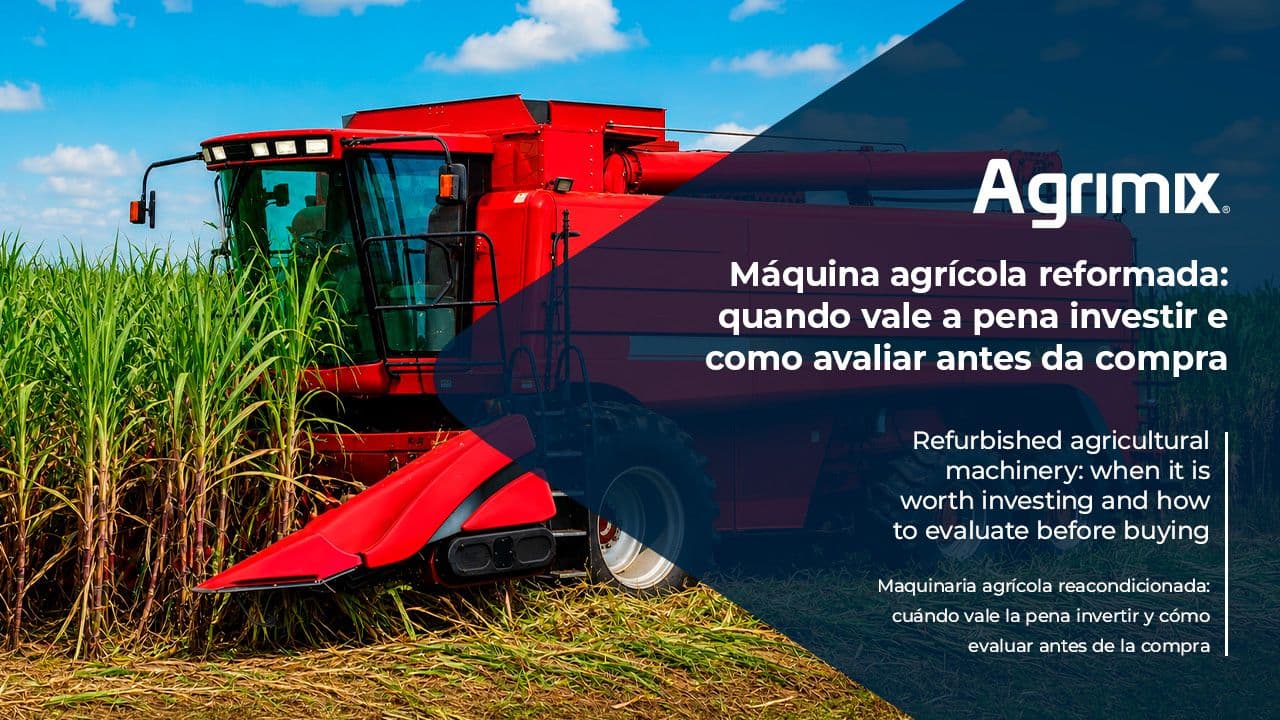
Investing in a reformed agricultural machine can be a strategic decision for producers, mills, and companies looking to expand operational capacity without compromising the budget on new equipment.
But not every reformed machine offers the same level of reliability. That's why understanding what to evaluate before purchasing is essential to turn the initial savings into long-term operational gains.
In this article, you'll discover when it's worth investing in a reformed agricultural machine, which criteria to analyze, and how to reduce risks during negotiation.
When Is It Worth Buying a Reformed Agricultural Machine?
Purchasing a reformed machine is usually advantageous when the operation needs to increase productive capacity without making a large investment in new equipment.
This scenario is common during periods of expansion, gradual fleet renewal, or replacing machines that have reached the end of their useful life.
In many cases, a reformed agricultural machine can offer excellent operational performance at a significantly lower cost, provided the refurbishment was conducted in a technical and thorough manner.
The decision usually makes sense when:
- There is a need to expand operations quickly.
- Investing in new equipment is not financially justified.
- Reformed machines with known history are available.
- The supplier offers technical support and transparency about the refurbishment performed.
Is a Reformed Machine the Same as a Used Machine?
No. This is one of the most common questions in the market.
A used machine can be sold exactly in the condition it is found. A reformed agricultural machine, however, goes through recovery processes, component replacement, technical inspections, and structural corrections to restore its operational capacity.
Therefore, the value of a reformed machine is not just in the age of the equipment, but in the quality of the intervention performed.
Equipment History
Before closing a deal, some points must be carefully analyzed.
Whenever possible, look for information about:
- Usage time.
- Type of operation performed.
- Maintenance history.
- Previous refurbishments.
This data helps to better understand the machine's context and its performance expectation.
Quality of the Refurbishment Performed
A good refurbishment goes far beyond paint. It's important to verify:
- Replaced components.
- Recovered items.
- Inspections carried out.
- Structural adjustments made.
- Operational tests performed after refurbishment.
The greater the transparency in this process, the greater the security of the purchase.
Parts Availability
A piece of equipment may be in excellent condition today but create future difficulties if there are problems finding replacement parts. Therefore, evaluate:
- Component availability.
- Technical compatibility.
- Support network.
- Ease of maintenance.
This factor directly impacts operational continuity.
Technical Support
The support offered by the supplier can make all the difference after the purchase. Having access to specialized technical guidance helps reduce doubts, speed up maintenance, and increase the equipment's useful life.
Total Cost of Operation
A common mistake is evaluating only the acquisition price. The ideal is to consider:
- Maintenance cost.
- Operational consumption.
- Parts availability.
- Downtime.
- Expected useful life.
An apparently cheaper machine can generate much higher costs over time.
Main Advantages of a Reformed Agricultural Machine
When the purchase is made with criteria, the benefits can be significant.
- Lower initial investment: the acquisition price is usually lower than a new machine, allowing better use of available capital.
- Faster return: with a lower initial outlay, the return on investment tends to happen in a shorter period.
- Expansion of operational capacity: the company can increase its productive capacity without the need for large investments.
- Better asset utilization: reformed equipment contributes to more efficient management of available resources.
Warning Signs During Negotiation
Some points deserve special attention. Be wary when:
- There is no information about the refurbishment performed.
- The equipment's history is unknown.
- No technical support is available.
- There is difficulty identifying replaced components.
- The price is well below the market average.
In industrial and agricultural operations, a cheap purchase can quickly turn into operational downtime and increased costs.
How to Make a Safer Purchase?
The best way to reduce risks is to work with specialized suppliers who have technical expertise, a track record, and transparency about the refurbishment processes performed.
In addition to equipment quality, support capacity, technical guidance, and parts availability should be part of the analysis.