
How to Reduce Operational Costs Without Compromising Harvester Performance
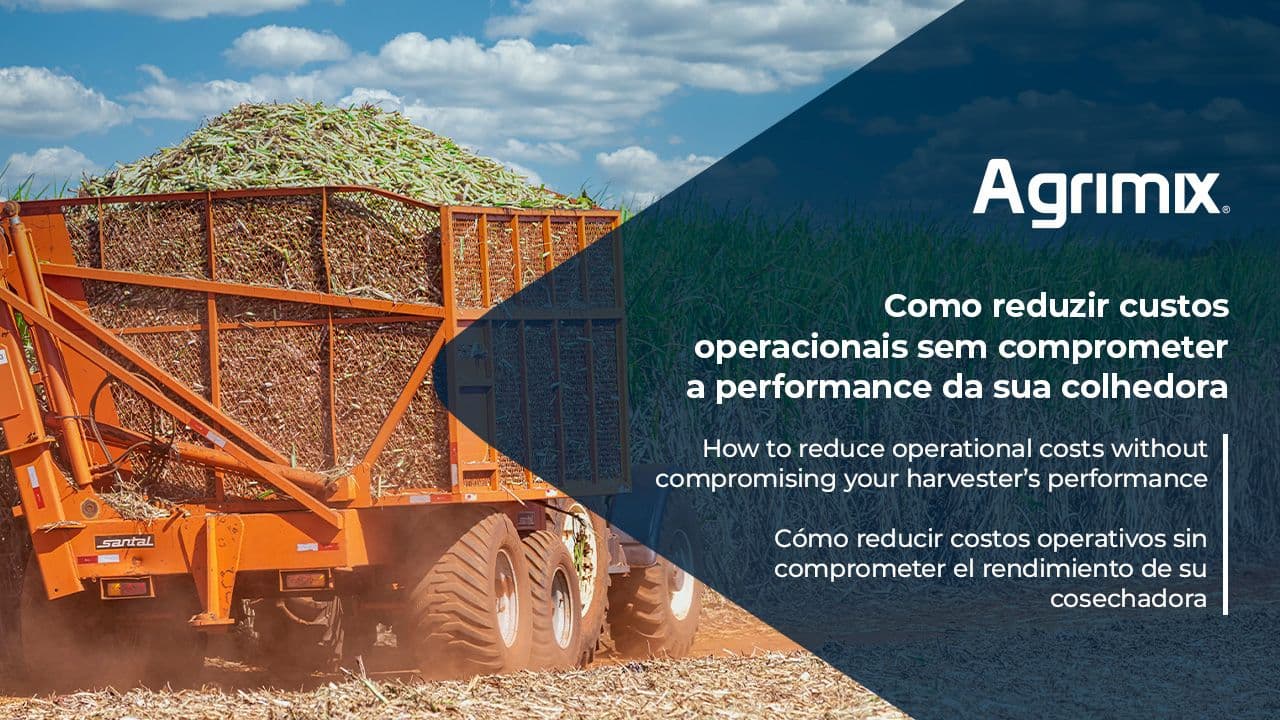
Reducing costs in the field is a priority for any agricultural operation, especially when it comes to sugarcane harvesters — machines that work under high demand, long working hours, and severe operating conditions. However, real savings don't come from rushed cuts, but from technical decisions that preserve mechanical availability, prevent unexpected downtime, and maintain productivity throughout the harvest.
When the goal is to reduce harvester operational costs, the focus must be on the total cost of the operation, not just the value of a single maintenance service, a part, or a one-off intervention. After all, a seemingly economical decision can generate greater losses when it compromises performance, safety, consumption, component service life, or harvest continuity.
Why harvester operational costs must be analyzed strategically
The harvester is one of the most critical pieces of equipment in the sugarcane operation. It directly affects the pace of the harvest, the quality of the raw material, transshipment efficiency, and the predictability of delivery to subsequent stages.
In practice, harvester operational costs involve several factors, such as:
- Fuel consumption;
- Component wear;
- Parts and maintenance costs;
- Technical labor;
- Machine downtime;
- Harvest losses;
- Productivity per working hour;
- Mechanical availability during the harvest.
Therefore, reducing costs doesn't simply mean spending less. It means understanding where money is being consumed, which failures recur, which components have the greatest impact on the operation, and which choices help the machine work with greater stability. Preventive maintenance is recognized as a way to increase predictability, reduce unexpected downtime, and improve cost control throughout the harvest. In high-intensity operations, the harvester's mechanical availability directly influences cost dilution per harvested ton.
Cutting maintenance can increase operational costs
One of the biggest mistakes when trying to reduce operational costs is postponing maintenance, extending the use of already-worn parts, or choosing components based solely on the lowest price.
At first, this decision may seem like savings. However, in the field, it usually produces the opposite effect. An off-spec part, neglected calibration, or an unidentified failure at the right time can compromise other machine systems, extend downtime, and increase corrective costs.
Corrective maintenance, when it happens unexpectedly, tends to be more expensive because it involves urgency, unavailability, potential secondary damage, and loss of operational rhythm. Preventive maintenance, on the other hand, allows for scheduled purchases, team organization, anticipated replacements, and reduced harvest unpredictability.
In an operation where time equals production, machine downtime doesn't just represent a shop cost. It represents a lost operational window, fleet pressure, and the risk of cascading delays.
Preventive maintenance: the first step to reducing costs safely
Preventive maintenance is one of the most important practices for reducing costs without compromising harvester performance. It allows monitoring component wear before failure, planning interventions, and preserving machine availability.
To be effective, the maintenance plan must consider:
- Engine hours;
- Failure history;
- Working conditions;
- Soil type;
- Operation intensity;
- Fuel and lubricant consumption;
- Component service life;
- Technical recommendations for each harvester model.
Prevention also helps avoid the domino effect in maintenance. A worn component often compromises other systems and turns a simple replacement into a complex stoppage. Therefore, monitoring signs of wear, noise, vibration, overheating, and changes in machine performance is essential to maintaining operational control.
Use indicators to find out where costs actually are
It is not possible to reduce operational costs precisely without measuring what happens during operations. Well-tracked indicators help transform maintenance and fleet management into more technical decisions.
Among the key indicators that can be monitored are:
- Maintenance cost per working hour;
- Maintenance cost per harvested ton;
- Fuel consumption per hour;
- Mean time between failures;
- Mean time to repair;
- Mechanical availability;
- Component replacement frequency;
- Failure recurrence by system.
These data points help identify whether the problem lies in part quality, incorrect application, lack of preventive maintenance, machine operation, or external field conditions. When a company tracks the harvester's history, it stops making decisions based solely on urgency and begins to recognize patterns. This control enables better negotiation, more planned purchasing, strategic parts stocking, and avoidance of decisions made in the heat of a breakdown.
Choose parts with compatibility, durability, and application in mind
The choice of parts has a direct impact on harvester performance and the total cost of the operation. A part with low durability may require frequent replacements, generate rework, and increase the risk of downtime. On the other hand, a part suited to the machine model and operation demands contributes to greater stability and predictability.
When selecting parts for sugarcane harvesters, it is important to evaluate:
- Compatibility with the machine model;
- Material resistance;
- Supplier origin;
- Performance history;
- Availability for replacement;
- Technical support;
- Cost per hour of use, not just purchase price.
This analysis prevents the operation from saving on the purchase and losing in the field. For high-demand equipment, the best cost-benefit lies in the part that sustains performance, reduces risk, and offers greater predictability throughout its use.
Calibration and operation also influence costs
Harvester performance doesn't depend solely on maintenance. The way the machine is calibrated and operated also directly affects costs.
Working speed, extractor rotation, cutting calibration, field conditions, and operator training all impact losses, impurities, and efficiency. Studies on mechanized sugarcane harvesting indicate that inadequate calibration can increase impurities and raw material losses, while operator training helps minimize these issues.
Another important point is working speed. Research on mechanized harvesting shows that increasing harvester speed can raise visible harvest losses, reinforcing the importance of adjusting pace and calibration according to field conditions.
In practice, this means that operating faster isn't always operating better. The pursuit of productivity must consider harvest quality, consumption, wear, and losses. An efficient operation is one that finds the balance point between pace, performance, and machine preservation.
Maintain a strategic stock of critical parts
Unexpected downtime becomes even more costly when the required part is not available. Therefore, maintaining a strategic stock of critical components can reduce machine downtime and protect the operation during high-demand periods.
This stock doesn't need to be excessive. The ideal approach is to analyze the fleet's history and identify which items have the highest turnover, greatest operational impact, or greatest difficulty in replacement.
Frequently worn parts, components linked to critical systems, and items with longer lead times should be carefully evaluated. This way, the company avoids emergency purchases, reduces dependence on tight deadlines, and gains speed in responding to failures.
Purchasing planning reduces costs and avoids emergency decisions
Emergency purchasing is often one of the most expensive ways to supply maintenance. When the operation only seeks the part after the machine has already stopped, it loses negotiating power, reduces selection options, and increases the risk of accepting inadequate alternatives due to urgency.
With planning, it is possible to:
- Anticipate harvest demands;
- Purchase parts with better criteria;
- Evaluate suppliers calmly;
- Negotiate deadlines and conditions;
- Reduce improvisation;
- Improve financial control of maintenance.
This planning becomes even more important in operations using John Deere and Case harvesters, where compatibility, origin, and availability are decisive factors for maintaining work continuity.
Team training is also cost reduction
Operators and maintenance teams play a direct role in harvester preservation. A well-trained operator identifies changes in machine behavior, respects operational limits, reduces unnecessary wear, and contributes to a more efficient harvest.
Similarly, a well-oriented maintenance team records failures, follows inspection standards, evaluates components with criteria, and avoids superficial diagnoses.
Training should not be viewed as an isolated cost, but as part of the performance strategy. When the team understands the impact of each adjustment, each inspection, and each decision, the operation gains consistency.
When machine overhaul or replacement enters the equation
In some cases, reducing operational costs also requires evaluating whether the harvester still delivers a healthy cost-to-performance ratio. Machines with a high recurrence of failures, low availability, and increasingly expensive maintenance can compromise operational results.
In these situations, it is important to analyze:
- Machine age;
- Maintenance history;
- Accumulated cost per harvest;
- Mechanical availability;
- Delivered productivity;
- Resale value;
- Possibility of overhaul;
- Viability of replacement with new or pre-owned equipment.
The decision should not be made solely based on the acquisition cost of another machine, but by comparing the cost of maintaining equipment with high recurring costs against investing in an alternative with greater operational predictability.